

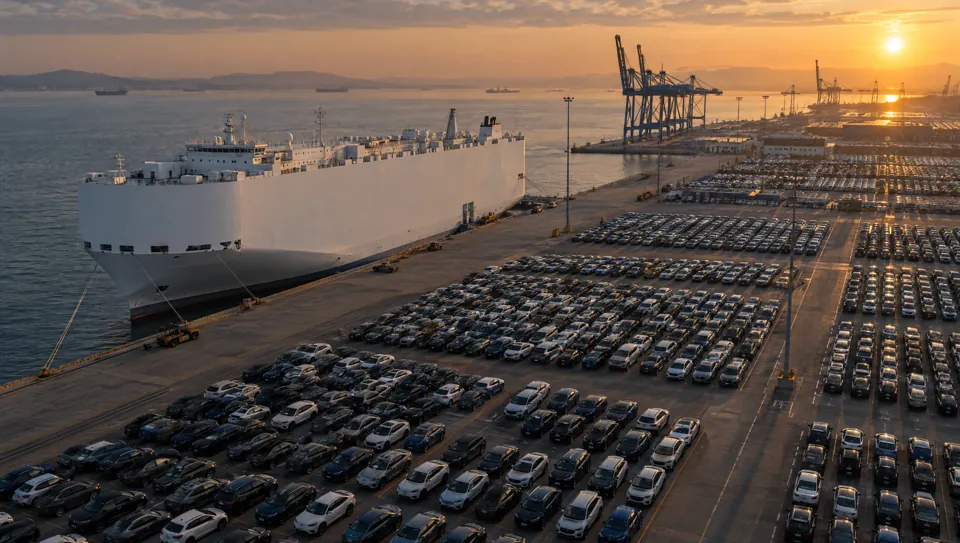
Gaining market share takes more than representing the brand. It takes connecting strategy, network, and results.
We connect network, customer engagement, data, and processes to help distributors and brand representatives gain more visibility into their operation and more capacity to grow.
01The challenge
Representing a brand means owning everything that happens between strategy and the market.
Product, positioning, and targets may come from headquarters. Execution happens here.
It is the distributor who has to develop the network, track sales, answer for aftersales, manage inventory and parts, adapt communication, sustain the customer experience, and report back to the manufacturer.
And it often has to do all of this with a much leaner structure than an automaker. That is why the challenge is not simply putting the brand on the market.
- Manufacturer
- Distributor
- Network
- End customer
- Develop the network
- Track sales
- Answer for aftersales
- Manage inventory and parts
- Adapt communication
- Sustain the customer experience
- Report back to the manufacturer
It is turning a global strategy into a local operation that works every day.
02Where the operation loses strength
Where the operation starts losing speed, margin, and visibility
-
You know what went into the network. You need to know what actually reached the customer.
Sell-in shows an important part of the operation, but it does not tell the whole story. Without a faster read on sell-out, decisions about inventory, mix, campaigns, and allocation keep being made with a partial view of the market.
-
The network executes the sale. The distributor is still accountable for the result.
Customer engagement happens at the point of sale, negotiation goes through the salesperson, and each dealer may have different processes or systems. When that information does not come back in an organized way, tracking performance stops being a reporting issue and becomes a management problem.
-
Headquarters sets targets. The market responds differently.
Forecast, mix, and volume may be defined from a regional or global perspective. In Brazil, competition, price, demand, sales pace, exchange rates, and local specifics come into play. The wider the gap between these two readings, the harder it is to react quickly.
-
Price and margin cannot depend on an outdated snapshot of the operation.
Import costs, exchange rates, incentives, available inventory, competition, and negotiation at the point of sale constantly change the commercial reality. Decisions get better when these variables can be seen together, rather than rebuilt manually every time someone needs to answer a question.
-
Responsibility continues after the sale.
Parts, warranty, maintenance, service campaigns, and network support are part of the experience the customer associates with the brand. When aftersales works in a fragmented way, the impact is not limited to the service shop. It reaches brand perception.
-
Headquarters, distributor, and network need to make decisions from the same reality.
Reports for the manufacturer, internal controls, dealer data, CRM, ERP, and spreadsheets do not always tell the same story. The problem is not a lack of information. It is turning scattered information into a useful view for those who need to decide.
03What we build
The operation changes when information starts working together.
Before talking about tools, we need to understand what management needs to see and control.
- How much has the network actually sold to end customers?
- Where are the commercial bottlenecks?
- Which locations are performing best?
- How are price, margin, and inventory behaving?
- Which opportunities have stalled?
- Where is aftersales losing returns?
- How much time does the team still spend consolidating information that already exists in other systems?
These are the questions that make technology start to make sense.

-
Network and sell-out visibility
We can create structures that consolidate network data without erasing the differences between locations, regions, models, or funnel stages. Management sees the whole picture and can drill down wherever there is an opportunity or a problem.
-
Customer engagement and opportunity management
Intelligent solutions can receive and distribute leads, record context, track response times, and organize the continuity of the commercial journey. Technology does not replace the network. It helps the distributor see more clearly what happens inside it.
-
Pricing, margin, and commercial decisions
When the challenge lies in pricing, we can bring together variables such as cost, margin, inventory, positioning, and commercial terms in a more structured view to support decisions.
-
Aftersales, warranty, and customer relationship
Appointments, maintenance campaigns, warranties, parts, and customer relationship can gain new layers of automation and follow-up, reducing dependence on manual processes without taking control away from the team.
-
Data and management
When the information already exists but is scattered, we can build a layer that connects systems and organizes data so management stops spending its energy just consolidating numbers.
Technology needs to help the distributor see the entire operation, not create one more place to look.
Find opportunities in my operation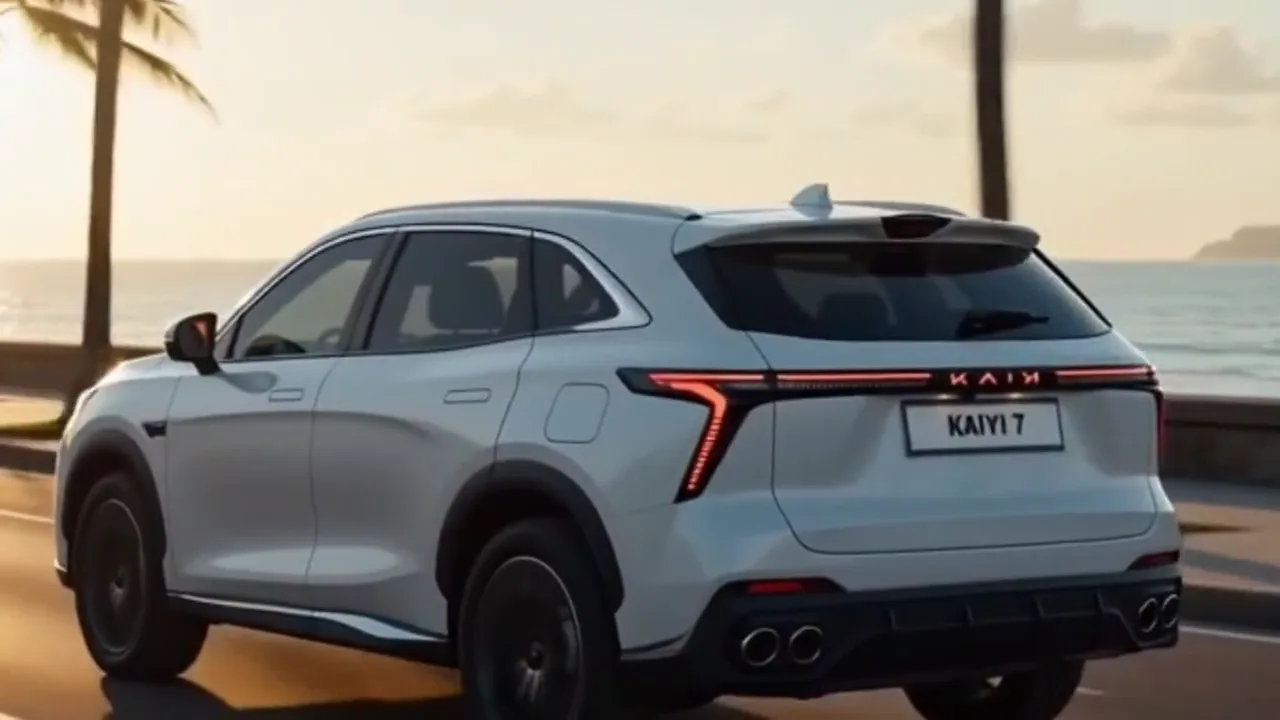
04AI visual production
Communication also needs to work in the market where the brand is being built.
Representing a brand is not just about selling its products. It also means building perception, supporting launches, and keeping communication consistent with what the public actually finds in the Brazilian market.
And global material does not always solve this on its own. The version sold here may be different. The trim may change. The setting may not speak to the local consumer. The campaign may arrive without all the formats the network needs. And for some launches, the vehicle is not even physically available yet when communication needs to start.
This is where AI visual production creates new possibilities.
Produce before the vehicle is physically available
Communication can start even when the unit is not yet available for a conventional production in Brazil.
Adapt communication without losing brand identity
Local productions can respect language, product, and guidelines while bringing communication closer to the reality of the market.
Create more from a single direction
Campaign, media, social, digital, and network materials can be developed within the same visual logic, with more room for adaptation.
Preserve product fidelity
Proportions, design lines, wheels, finishes, colors, and other vehicle characteristics go through direction, refinement, and review before approval.
Headquarters material introduces the brand. Local communication needs to make it happen here.
Talk about a production05Systems
Evolving the operation does not mean replacing the systems that are already part of it.
ERP, CRM, headquarters systems, tools used by the network, internal databases, and proprietary processes already support important parts of the business.
Our work starts by understanding this structure. From there, we identify what needs to be connected, what can be automated, and where there is real room to build a new solution.






-
We integrate
what already works.
-
We automate
what can evolve.
-
We build
what does not exist yet.
Technology comes in to work with the existing operation, not to force the company to reorganize the whole business around yet another platform.
06Real case · Automotive sector · Dominican Republic
When different parts of the business start working as one operation
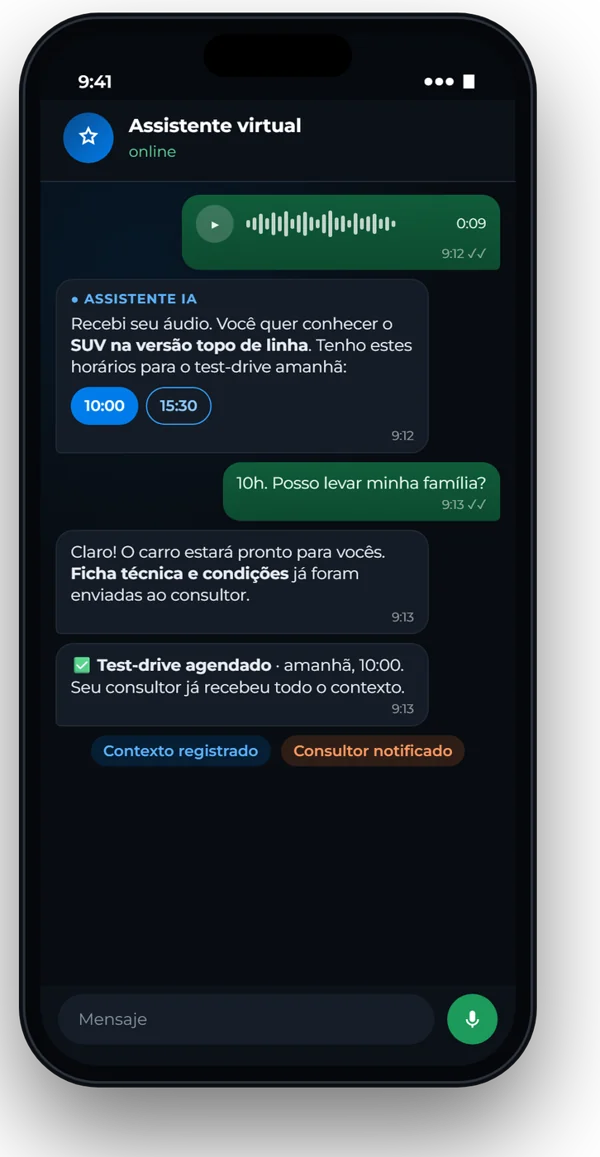
In an automotive company in the Dominican Republic, our work now spans different areas of the same business, including visual production, marketing and acquisition, customer engagement, data, automation, and systems.
Four custom-built applications are in production.
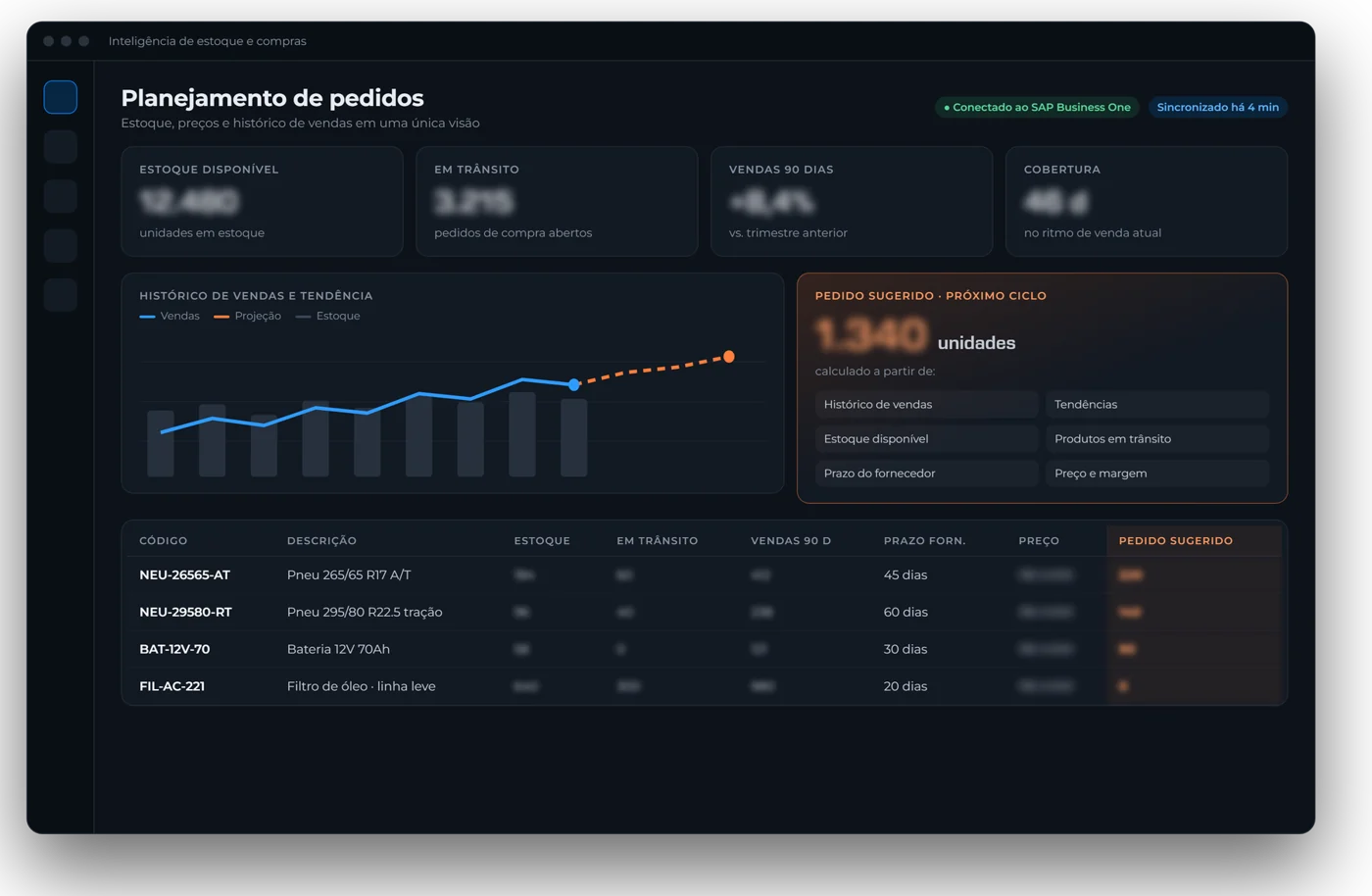
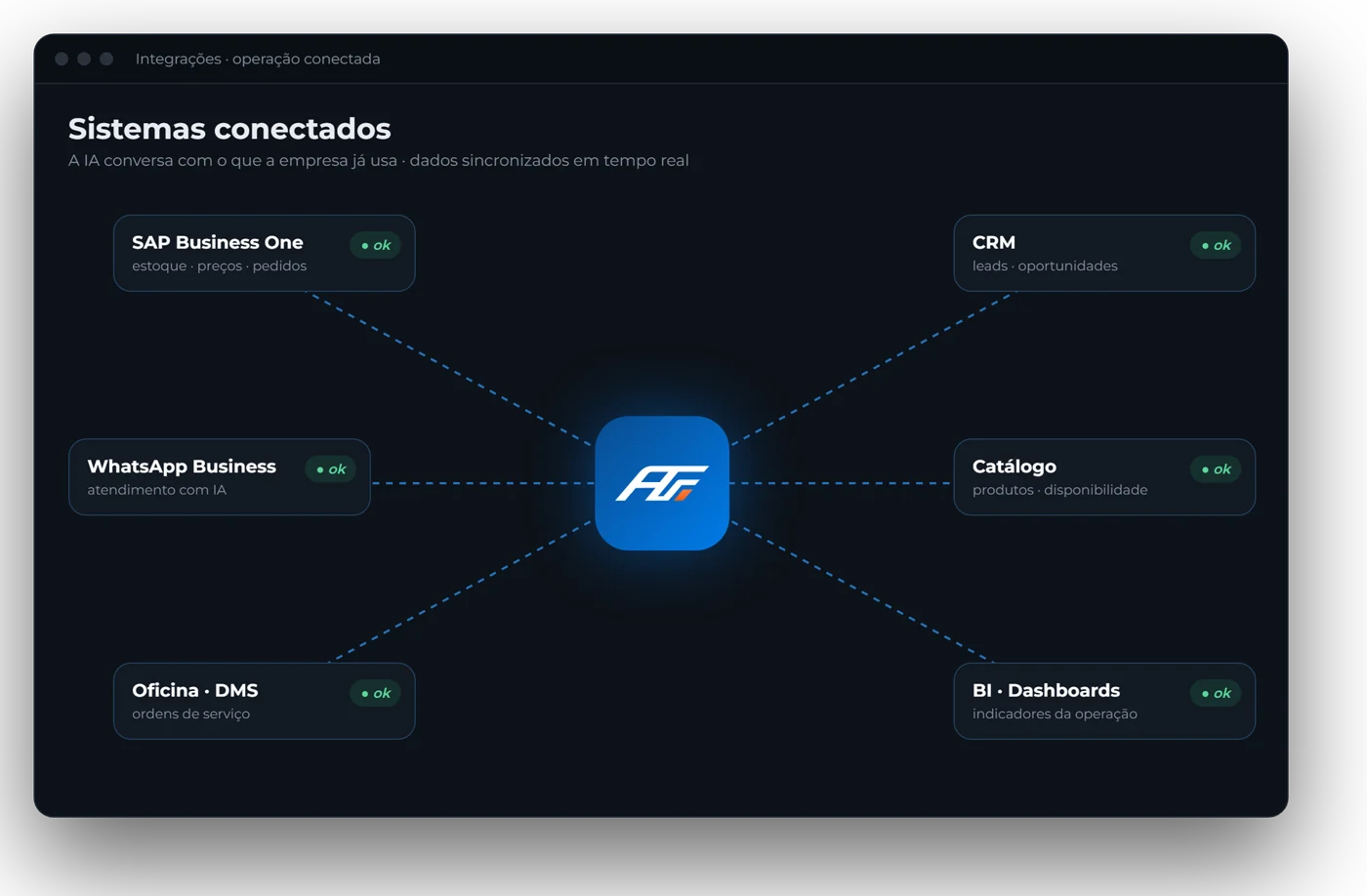

- 01
Inventory, pricing & purchasing
Connects inventory, pricing, sales, and purchasing planning with SAP Business One.
- 02
Technical operations
Organizes technical processes, inspections, warranties, and services.
- 03
Digital catalog
Brings products and availability closer to the commercial journey.
- 04
Intelligent customer engagement
Provides quotes, looks up information, schedules services, and transfers the conversation to a person when needed.
The value is not in adding tools. It is in making information, technology, and people work better within the same business.
Explore the full case07How we work
We do not start by trying to fit your operation into an off-the-shelf solution.
A distributor representing a brand has to balance two realities at once. On one side are the manufacturer, product, targets, standards, and strategy. On the other are the market, network, customers, price, inventory, and local execution.
That is why we start by understanding how these parts work today.
We understand the operation
We map journeys, network, systems, data, responsibilities, and friction points.
We identify where the real opportunity is
Not every problem calls for a new system, not every process needs to be automated, and not every automation needs artificial intelligence.
We build on the existing structure
Integrations, automations, artificial intelligence, and systems are developed around what the company already uses and what needs to keep working.
We support the evolution
Training, support, follow-up, and new needs are part of the relationship. As the network grows and processes mature, technology can evolve too.

08Next step
What is keeping your operation from moving forward with more clarity?
- It may be sell-out visibility, network performance, price and margin setting, inventory, the path of opportunities, aftersales, or data that still has to be consolidated manually.
- Or it may be a specific problem that no off-the-shelf tool has solved.
Tell us the context. We start there. Let’s understand what your operation needs to build now.
Form sent
We received
your context.
Thank you. The AUTIFEX team will read what you wrote and get back to you by email or phone.
Demo mode: the submission endpoint is not configured yet, so no data was sent.