


Intelligence built to work inside your operation.
We develop tailor-made artificial intelligence, automation and systems for automotive companies. We start from the processes, systems and goals the company already has to build technology that fits the operation, not the other way around.
From customer engagement to back office. From data to decision. From manual process to automation.
01We don't start with the tool
We start with
what needs
to work better.
Every operation has different processes, systems, teams, and challenges. That's why we don't start from an off-the-shelf platform and try to make it fit the business.
We learn how the company works, where the bottlenecks are, what information already exists, and what needs to evolve. From there, we define what should be integrated, automated, or developed.
-
We integrate
what already works.
We connect new solutions to the systems, data, and processes that are already part of the company.
-
We automate
what can evolve.
We turn repetitive tasks, manual workflows, and operational steps into smarter processes.
-
We build
what does not exist yet.
When the need calls for a dedicated solution, we develop the system around the reality of the operation.
02Where we can build intelligence
AI can live
in the conversation with
the customer. But also
in everything that comes
after it.
Smart customer engagement
Solutions that can serve customers on channels like WhatsApp, understand different requests, collect information, look up operational data, and move each conversation to the next step.
AI can understand text, audio, and images, retrieve information from previous interactions, and keep service available even when the team isn't.
Sales and opportunities
Qualification, quoting, follow-up, opportunity routing, and handoff to salespeople or advisors with the conversation context already organized.
The goal isn't just to respond faster.
It's to keep an opportunity from stalling halfway.
Scheduling and service journeys
AI can look up customer and vehicle information, check availability, and book appointments directly in the company's systems.
Test-drives, maintenance, services, and other journeys can be built around each operation's specific rules.
Fewer steps between the customer's intent and the action that needs to happen.
Catalogs, products, and quotes
We can build catalogs connected to the company's real data to present products, prices, features, and availability in an organized way for customers and sales teams.
The journey can continue straight to WhatsApp or the sales team, already carrying the details of the chosen product. We can also develop quoting workflows connected to the operation's inventory and commercial rules.
The customer arrives at the conversation better informed. The team starts closer to the sale.
Inventory, pricing, and purchasing
Internal systems can bring inventory, availability, pricing, sales history, and commercial information together in a single view.
Technology can also support purchasing decisions by analyzing sales patterns, current availability, products in transit, lead time, and other criteria defined by the company.
Less reliance on spreadsheets. More information in the hands of those who need to decide.
Aftersales and technical operations
Intelligence doesn't have to stop when the sale ends. We can build solutions for aftersales service, maintenance, services, parts, inspections, work orders, warranties, and asset tracking.
In field operations, systems can be used directly by technicians and crews on phones or tablets, recording information the moment the work happens.
The process moves off paper and into the operation in real time.
Data and dashboards
Information scattered across different processes and systems can be organized into dashboards built around each team's reality.
Inventory, sales, operations, customer service, performance, alerts, and metrics become available in a clearer, more actionable view.
Because stored data is not the same as information ready to act on.
Illustrative screens
03AI doesn't have to work alone
It needs to know
what it can do,
what it can't,
and when to bring
someone in.
A smart solution also needs limits.
- Clear rulesWe define which decisions the AI can make, what information it can access and what must be validated.
- Handoff with contextWhen a conversation needs a person, the team picks up where the AI left off, without making the customer start over.
- Protected dataPrices, availability, schedules and business rules follow the operation's official data.
- 01AI resolvesQuestions and steps within the defined rules.
- 02AI checks the systemPrices, hours, and availability come from official data.
- 03AI recognizes the limitOut-of-scope situations don't go unanswered.
- 04A person takes over with contextThe team picks up where the AI left off.
Automation where it makes sense. Human control where it's needed.
04Tailor-made solutions
Different operations
shouldn't get
the same solution.
An automaker doesn't operate like a dealership network. A sales operation doesn't run the same processes as aftersales.
And even two companies in the same segment can use completely different systems, journeys and rules. That is why each segment has its own starting point.
-
 Solutions for
Manufacturers and automakers
From brand demand to results across the network.
See solutions
-
 Solutions for
Distributors and importers
Network, sell-out, pricing, margin and aftersales.
See solutions
-
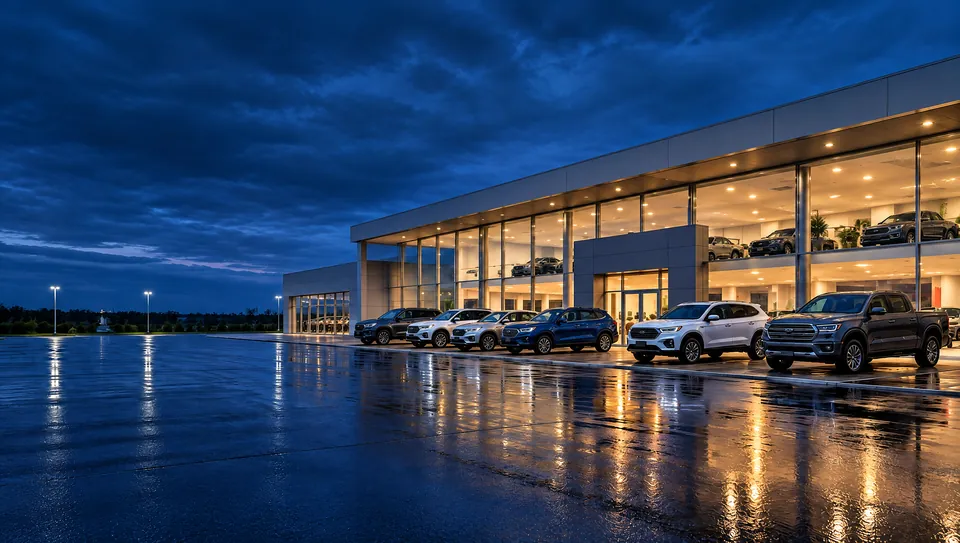 Solutions for
Dealer groups
Customer service, funnel, aftersales and group view.
See solutions
The problem defines the solution. Not a prepackaged bundle.
05Your company doesn't need to switch systems to get started
We build on
the structure that
already exists.
A new layer of intelligence doesn't have to mean abandoning the CRM, ERP, DMS, or other systems that are already part of the operation. We develop integrations so the solutions work with existing data and platforms.
In projects already in production, for example, we built systems integrated directly with SAP Business One, making it possible to look up and update operational information without relying on parallel spreadsheets.
When something new is needed, we develop the application and connect that new layer to the company's technology ecosystem.
-
New layer
Autifex intelligence
- Customer service
- Automations
- Applications
- Dashboards
-
Connection
Integrations
- APIs and connectors
- Data lookup and updates
-
What the company already uses
Existing systems
- CRM
- ERP
- DMS
- SAP Business One
- Spreadsheets and databases
No need to rebuild what already works to improve what can still work better.
06One ecosystem can have several connected solutions
Not every problem
has to fit inside
the same tool.
An operation may need one solution for the customer and another for the team. One can work on WhatsApp. Another can organize inventory. Another can support purchasing. Another can track aftersales or turn data into dashboards.
These applications can be developed to perform specific functions and, when needed, share information and connect to the company's core systems.
For the customer
Core systems
- ERPInventory, pricing, and billing
- CRMCustomers and opportunities
- DMSService shop, services, and parts
For the team
Illustrative representation · core systems vary by operation
We don't just think in isolated tools. We think about the operation they need to move.
Real case · Dominican Republic
07From the WhatsApp conversation to the system behind the operation
We've already built
this approach
in practice.
For an automotive operation in the Dominican Republic, we developed several applications tied to real business needs.
- 01
Smart customer engagement
A virtual assistant on WhatsApp that understands text, audio, and images, prepares quotes, looks up information, schedules services, and routes specific situations to human advisors.
- 02
Inventory and purchasing intelligence
A system connected to SAP that centralizes inventory, pricing, sales, and availability, and uses historical data, lead time, and other variables to support planning for new orders.
- 03
Technical operations management
A platform for tracking tires across customer fleets, with field inspections, alerts, history, warranties, work orders, and different access levels.
- 04
Integrated sales catalog
A digital storefront connected to the operation's inventory and pricing, letting customers find the product and reach the sales team on WhatsApp with their choice already identified.
Different problems. Different solutions. One connected operation.
Explore our cases08We don't deliver and disappear
We work as
an extension
of your team.
Implementing technology is only part of the work. Once a solution goes live in the operation, questions, lessons, adjustments, and new needs come up.
That's why we stay close to the teams that use what we build.
- 01
Training
We support the people who will work with the solution so they understand how to use it in their daily routine.
- 02
Support
We remain available for questions and needs related to how the solutions work.
- 03
Monitoring
Staying close to the operation helps identify adjustments and areas that can be improved over time.
- 04
Evolution
When a process changes or a new need arises, we work with the company to assess how technology can keep pace with that change.
More than providing technology, we want to build capability alongside the operation.

09Next step
What does your
operation need
to solve now?
- It might be customer service that needs to respond better.
- An opportunity that can't be left without follow-through.
- Scheduling that still requires manual steps.
- Information scattered across systems and spreadsheets.
- A team that needs better visibility into its data.
- An operational process that could be automated.
- Or a specific need that no off-the-shelf solution really meets.
Tell us the context. Technology starts with understanding the operation.
Form submitted
We've received
your context.
Thank you. The AUTIFEX team will read what you wrote and get back to you at the email or phone number provided.
Demo mode: the submission destination has not been configured yet, so no data was sent.